We are interested in understanding the fundamental molecular principles regulating the assembly, function and plasticity of electrical synapses
|

Role of glial gap junctions and undocked hemichannelsGlial cells play crucial roles in the development, maintenance, and functioning of the nervous system. These cells form gap junctions as well as undocked hemichannels, which are half, unopposed channels open to the extracellular environment. The molecular mechanisms by which glial gap junctions and undocked hemichannels regulate nervous system development and functional output remain to be fully elucidated. Additionally, the post-developmental and maintenance roles of glial channels in regulating nervous system architecture and function remain to be understood.


We found that individual glial cells express multiple channel components simultaneously. Our work begins to elucidate how glial cells utilize these components to independently assemble mole-cularly distinct gap junctions and undocked hemichannels, thereby maintaining specific aspects of glial morphology and function, as well as regulating animal behaviour.

|

Plasticity under nutritional stressPlasticity of the neuronal connectome allows animals to adapt to changing environmental conditions by modulating information processing and ultimately altering their behavior. We want to understand how plastic changes occur in electrical synaptic connectivity. We have previously shown that the neuron-type-specific expression of innexin genes exhibits a striking extent of plasticity in response to altered environmental conditions (Bhattacharya et al., Cell, 2019).

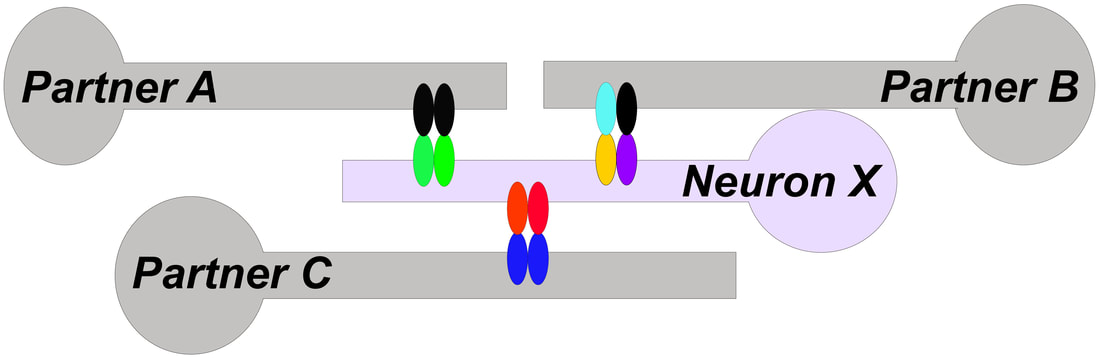
Our work further showed that, at the level of individual synapses, the combinatorial innexin code of heterochannel synapses can be altered at specific synapses within a single neuron. This work provides a novel mechanism for electrical synapse plasticity (Vats et al., PNAS, 2026)
Furthermore, across developmental stages, animals modulate behavioral responses to external cues according to intrinsic physiological states. However, it remains unclear whether nervous systems at different developmental stages utilize the same underlying molecular mechanisms to produce equivalent behavioral modulations. Using Caenorhabditis elegans, we showed that the nervous system employs distinct, developmental-stage-specific molecular mechanisms to achieve equivalent plasticity in chemotaxis behavior in response to physiological states. These findings establish a foundation for understanding how stage-specific developmental programs modulate interactions between conserved signaling pathways, including the insulin/IGF and CRH-1/CREB1 pathways, with potentially broader implications for developmental, metabolic, and aging research (Sahu et al., 2026, Accepted for publication in Genetics). |


We are using microscopy, genetics, biochemistry, CRISPR/Cas9-based genome editing, various neuronal activity sensors and behavioural assays to guide the mission.

